
The Strategic Advantage of Partnering with an OEM Whitening Cream Supplier: A Comprehensive Guide to Sourcing, Compliance, and Market Dominance

The global skincare industry is experiencing a seismic shift. While direct-to-consumer (DTC) brands dominate the digital shelf, the real battle for market share is fought much earlier in the supply chain. For entrepreneurs and established brands looking to capture the lucrative skin-brightening sector, the choice of an OEM whitening cream supplier is the single most critical decision determining success or failure.
Selecting a manufacturing partner is no longer just about finding the lowest cost per unit. It is a strategic exercise in supply chain management, regulatory compliance, and brand alignment. With the global third-party cosmetics manufacturing market projected to grow significantly, understanding how to navigate the complexities of OEM partnerships is essential .
This guide serves as your definitive playbook. We will move beyond basic definitions to explore the technical capabilities, regulatory landscapes, and procurement strategies that define top-tier suppliers, ensuring your brand not only enters the market but dominates it.
Decoding the OEM Whitening Cream Landscape
The ecosystem of contract manufacturing is often misunderstood. To source effectively, you must first understand the structural dynamics of the market and the technical nuances of the product itself. A strategic sourcing approach begins with a clear picture of the competitive landscape and the biological challenges your product aims to solve.
Global Manufacturing Hubs vs. Niche Specialists
While cosmetic manufacturing is a global enterprise, specific regions have solidified themselves as powerhouses due to vertical integration and specialized expertise. The Guangdong region in China, particularly Guangzhou, remains the epicenter for skincare manufacturing. This dominance is not accidental; it stems from decades of investment in biotech infrastructure and tightly integrated supply chains for high-purity actives like kojic acid, alpha-arbutin, and vitamin C derivatives .
However, a "one-size-fits-all" approach doesn't apply to suppliers. The market is broadly segmented into two categories:
-
High-Volume Conglomerates: These factories (like Cosmax or Kolmar) offer immense scale and are ideal for massive launches but may have high Minimum Order Quantities (MOQs) that are prohibitive for niche brands .
-
Agile Specialists: These are mid-sized OEM whitening cream suppliers focused on specific categories like "祛斑美白" (freckle removal and whitening). They offer deeper R&D expertise in melanin inhibition and more flexibility in custom formulation .
Your choice between a global giant and a niche specialist should align with your brand's volume forecasts and need for proprietary technology.
The Science of Skin Brightening: What Your Supplier Must Know
A true OEM partner doesn't just mix ingredients; they understand dermatology. An effective whitening cream targets melanin production at its source. When evaluating a supplier's technical expertise, you must look beyond the marketing claims and assess their understanding of the biological pathway.
The most effective formulations today move beyond simple physical exfoliants. Your supplier should demonstrate proficiency with active ingredients that have clinical backing:
-
Tyrosinase Inhibitors: Such as Kojic Acid, Arbutin (in concentrations up to 7%, depending on the market), and Tranexamic Acid, which prevent the formation of melanin.
-
Melanin Interference: Ingredients like Niacinamide, which prevent the transfer of melanosomes to skin cells .
-
Antioxidants: Stable forms of Vitamin C (like Ascorbic Acid or its derivatives) that reduce oxidative stress and brighten the complexion.
A top-tier OEM whitening cream supplier will have in-house dermatological testing and formulation labs capable of adjusting pH levels (ideally between 5.0–6.0 for sensitive skin) and viscosity without compromising the stability of these potent actives .
Critical Evaluation Criteria for Supplier Selection
Once you understand the landscape, the next step is rigorous vetting. The cost of a wrong partnership extends far beyond the financial—it includes delayed market entry, regulatory seizures, and brand reputation damage. Implementing a structured evaluation framework is non-negotiable.
Quality Assurance Systems and Regulatory Compliance
In the age of the informed consumer, a "clean" label is a baseline requirement, not a differentiator. Your OEM partner must operate under a regime of documented quality assurance. This is where the "OEM whitening cream supplier" keyword intersects with high commercial intent, as buyers are explicitly searching for safety and legitimacy.
You must demand proof of:
-
Facility Certifications: ISO 22716 (Good Manufacturing Practices for Cosmetics) and GMPC are the gold standards. These ensure that production follows strict guidelines for hygiene, traceability, and quality control .
-
Product-Specific Safety Data: Request Certificates of Analysis (CoA) for each batch. These documents should verify the absence of heavy metals, microbial contaminants (per ISO 21150), and prohibited substances like hydroquinone, mercury, or corticosteroids .
-
Stability Testing: The supplier should conduct accelerated stability tests (e.g., storing the product at 45°C for 90 days) to ensure the formulation remains safe and effective under various climatic conditions .
Production Flexibility and Minimum Order Quantities
Your cash flow and inventory strategy are directly tied to the supplier's flexibility. The traditional model of requiring tens of thousands of units per SKU is eroding. The rise of indie brands and direct-to-consumer models requires agility.
When negotiating with an OEM whitening cream supplier, clarify their flexibility regarding:
-
MOQ Tiers: Many modern suppliers now accommodate trial runs or limited-edition drops. Some accept orders as low as 100–200 units for standard formulations, allowing for market testing without massive financial risk .
-
Scalability: While low MOQs are great for starting, the supplier must also handle high-volume reorders seamlessly. A supplier's on-time delivery rate (aim for >97%) is a strong indicator of their ability to scale with you .
-
Customization Depth: True OEM partnerships allow for full control. This includes formula modification (e.g., fragrance-free, vegan), texture adjustment (gel vs. cream), and packaging innovation (airless pumps vs. jars) .
Navigating the OEM Collaboration Models
Understanding the different types of collaboration models is essential for protecting your intellectual property and defining the scope of work. The terms OEM and ODM are often used interchangeably, but they represent distinct relationships with different implications for your brand's uniqueness.
OEM (Original Equipment Manufacturing): Your Formula, Their Production
In a pure OEM whitening cream supplier relationship, you come to the table with a fully developed formula. Perhaps you have a proprietary blend developed by a cosmetic chemist, or you own a patent on a specific delivery system.
In this model, the supplier acts strictly as a contract manufacturer. Their responsibility is to source the raw materials listed in your配方 (formula) and produce the cream according to your specifications. This model offers the highest level of brand protection because the formulation is exclusively yours. However, it requires you to have significant in-house R&D capabilities or a partnership with an external lab .
ODM (Original Design Manufacturing): Off-the-Shelf Innovation
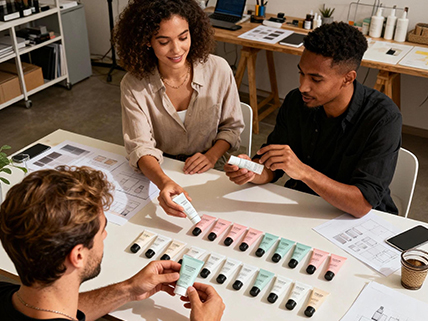
Most new brands enter the market through an ODM relationship. Here, the OEM whitening cream supplier presents a catalog of "private label" or "existing" formulas they have already developed. These are market-tested, stable, and ready to go.
You can then customize this base formula—adjusting the fragrance, adding a specific active booster, or changing the color—to create a semblance of uniqueness. This model significantly reduces R&D time and cost. The best ODM partners have a vast library of "white label" whitening creams that have already passed stability and safety tests, allowing you to go from concept to shelf in a matter of weeks .
Bespoke Development and Co-Creation
The most advanced form of partnership sits between OEM and ODM. In this model, you provide a concept or a "problem to solve" (e.g., "I need a whitening cream that is also safe for post-laser treatment"). The supplier's R&D team then works to create a unique formula from scratch, blending their ingredient expertise with your market insights. This "co-creation" model often involves exclusive licensing and can be a powerful way to differentiate your brand in a crowded market .
Cost Structures and Price Benchmarking
Price is a function of value, but in B2B sourcing, understanding the underlying cost drivers is key to effective negotiation. The price per unit quoted by an OEM whitening cream supplier is not arbitrary; it is a composite of several factors.
Ingredient Sourcing and Active Concentrations
The bill of materials is the largest cost component. A cream based on cheap mineral oil and a trace amount of botanical extract will cost significantly less than one loaded with high-purity niacinamide, encapsulated retinol, or stabilized Vitamin C.
When comparing quotes, ask for a detailed breakdown of active ingredient percentages. A supplier offering a cream at $0.78 per unit may be using a generic base with limited innovation, while a premium partner at $3.40 per unit is likely investing in proprietary delivery systems (like liposomal vitamin C) and higher concentrations of actives .
Packaging and Branding Complexity
Your cream is the hero, but the packaging is the vehicle that delivers the brand story. Customization in packaging adds cost but also adds perceived value.
-
Primary Packaging: Airless pumps protect sensitive whitening actives from oxidation better than jars, but they cost more.
-
Finishing: Soft-touch lamination, foil stamping, and embossing on boxes increase tactile appeal and shelf presence.
-
Minimums: Custom molds for unique bottle shapes are expensive but create instant brand recognition .
Logistics and Supply Chain Efficiency
The quoted ex-works price is just the starting point. Factor in shipping (air freight is fast but expensive; sea freight is cheaper but slower), insurance, and potential import duties. A supplier with a high on-time delivery rate and efficient logistics coordination can save you significant costs in warehousing and rush shipping .
Ensuring Market Access and Compliance
You have found the perfect OEM whitening cream supplier and developed a stunning product. But if it cannot legally be sold in your target market, your investment is wasted. Bridging the gap between the factory floor and the regulator is the final, and most critical, step.
The Regulatory Gap: From Factory to Market
A common pitfall for brands is assuming that a reputable OEM supplier's documentation is sufficient for global market entry. While a good supplier provides Safety Data Sheets (SDS) and Certificates of Analysis, these documents may not meet the specific legal requirements of the European Union or the FDA .
For example, to sell in the EU, you need a Cosmetic Product Safety Report (CPSR) signed by a certified EU safety assessor. The tests performed by the OEM (e.g., stability under tropical conditions) may need to be supplemented by EU-accredited tests (e.g., challenge tests and heavy metal panels per EU protocols) .
The Role of the Responsible Person
To navigate this, you or your distributor must act as, or hire, a "Responsible Person" (RP) in the destination country. The RP is legally accountable for ensuring the product complies with local regulations. They will take the documentation from your OEM whitening cream supplier, fill in the gaps, compile the Product Information File (PIF), and register the product with the necessary portals (like CPNP in Europe) .
Ensuring your OEM partner is transparent and responsive in sharing raw material data and manufacturing details is vital for this final compliance step.
Conclusion: Building a Partnership for Market Dominance
The journey to launching a successful whitening cream is a marathon, not a sprint. It requires a blend of scientific understanding, strategic sourcing, and regulatory diligence. The right OEM whitening cream supplier is more than a vendor; they are a strategic partner who contributes to your brand's equity through quality, innovation, and reliability.
By focusing on verified capabilities, demanding transparency in quality assurance, and understanding the nuances of collaboration models, you position your brand not just to compete, but to lead. As the demand for personalized, safe, and effective brightening solutions grows, the partnerships you forge today will define your market dominance tomorrow.
Ready to start your sourcing journey?
Contact our team of procurement specialists to get matched with vetted OEM whitening cream suppliers who meet the highest standards of quality and compliance. [Link to Contact Page/Inquiry Form]
Related_News
-

Sing Foo Participated in the 2025 Shanghai Beauty Expo
-
New GMP-Certified Production Line Officially Launched
-
New Product Series for Global Market
-
Skincare Manufacturer: How SINGFOO Masters the Art of Cosmetic Innovation
-
Cosmetic Manufacturer: SINGFOO – Where Vision Meets Precision in Beauty Manufacturing


SUBSCRIBE
IF YOU REQUIRE THE MOST SUITABLE PRODUCTS, FEEL FREE TO CONTACT US.
INQUIRY